Flatbed Towing in Lewisville, TX
All four wheels off the ground and nothing turning. The right call for all-wheel drive, electric cars, low clearance and any vehicle that no longer rolls.
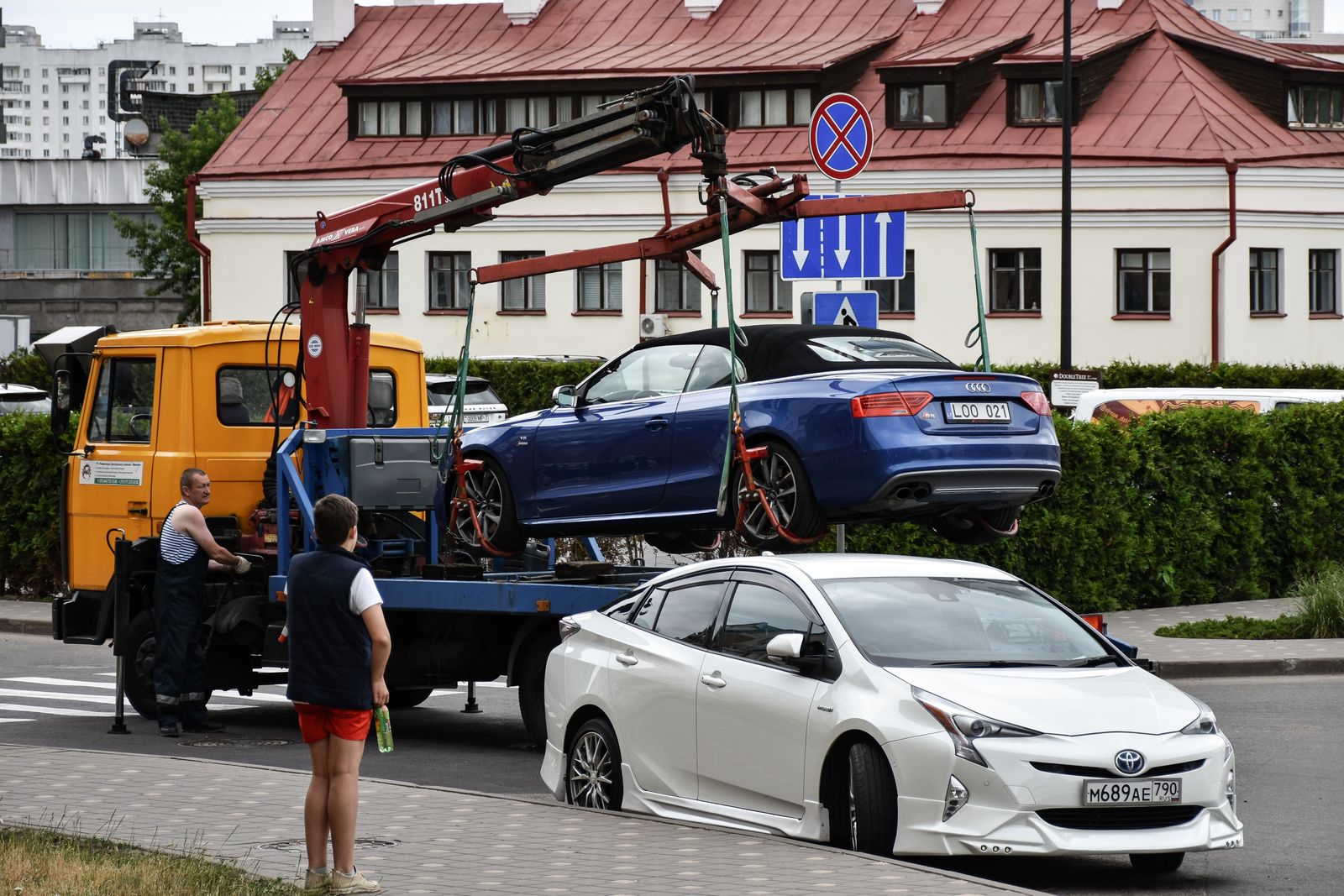
When it has to ride on the deck
Flatbed towing in Lewisville, TX is the safe default for anything modern, anything low and anything broken. The vehicle is winched up a tilting steel deck, chained at four points and carried with no wheel turning at all. Nothing in the driveline moves, so nothing in the driveline gets damaged on the way to the shop.
A wheel lift is quicker to hook and cheaper to run, and for a front-wheel drive car that still rolls it is a perfectly good answer. The trouble starts when a wheel lift gets used on a car that needed a deck, because the damage does not show up until later, and by then the tow is long paid for.
The vehicles that need a deck
Four groups, and between them they cover most of what is on the road in Denton County now.
All-wheel and four-wheel drive
Crossovers and SUVs dominate the traffic on SH-121 and I-35E, and most of them are all-wheel drive. On these, the axles are tied together. Tow with two wheels down and the coupling between them slips continuously for every mile of the journey, generating heat with no load path to escape through. Transfer cases and center differentials fail this way. Your owner manual will say so in the towing section.
Electric and hybrid
An EV motor turns into a generator the moment the wheels spin it. Towing with the drive wheels on the road feeds current into a battery system that is not asking for it, and on some models the parking brake will not even release without power. Every manufacturer selling EVs in Texas specifies flatbed transport, and there is no workaround worth trying.
Lowered, classic and long-wheelbase
A stock tilt deck presents an approach angle that a lowered front lip will not clear. Extended ramps or blocks fix it, but only if the operator knows to bring them. The same goes for classics with soft suspension and long-wheelbase vans that ground out at the break of the ramp.
Anything that no longer rolls
After a real impact, wheels are seized, tires are shredded and steering is bent. Nothing is rolling anywhere. The car gets dragged up the deck on a winch line, which is also why accident towing is almost always a flatbed job.
Why so many Lewisville calls end up on a deck
Two local patterns drive it. The first is the Sam Rayburn Tollway. Blowouts there happen at seventy miles an hour, and by the time a driver reaches an exit the sidewall is gone and the wheel itself is often damaged. There is nothing left to fit a spare to, so a roadside tire change turns into a flatbed tow to a tire shop.
The second is the vehicle mix in Castle Hills and the newer Lewisville subdivisions off SH-121. These are all-wheel drive crossover neighborhoods. A dead battery in one of those driveways is a deck job even though the car is undamaged, simply because of how it is built.
Add the lake. Vehicles winched out of soft ground at Lake Park often come out with mud packed into brakes and a wheel that will not turn freely. Once it is out, it goes on the deck rather than being dragged home. That handoff from recovery to flatbed is one of the more common two-part jobs around the water.
How the load actually works
Worth knowing, because it explains what the driver needs from you and how long it takes.
- Space to tilt. The deck slides back and tilts down, so the truck needs a straight run of about forty feet behind the car. In a tight parking structure like the Vista Ridge decks, that can mean moving the vehicle out to an open level first.
- A point to pull from. Modern cars have a screw-in towing eye, usually behind a popout cover in the bumper and stored with the jack. If you know where yours is, say so. It saves the driver hunting.
- Neutral, or not. If the car has power, neutral makes the pull easy. If it is dead and the parking brake is set electronically, the winch does all the work and the wheels skid up the deck on skates.
- Four-point tie down. Chains or straps at each wheel, not over the body. Straps run to the wheels so nothing loads the suspension or the paint.
Loading takes longer than hooking a wheel lift. Ten to fifteen minutes is normal and it is time well spent.
Booking one without wasting a trip
Say four things when you call: the make and model, whether it is all-wheel drive or electric, whether it rolls and steers, and how much room there is where it sits. Those four decide whether a standard deck turns up or whether the job needs extended ramps, skates or a second set of hands.
If you are unsure about the drive type, the table on our home page walks through the common cases, or read the badge on the tailgate. When it is genuinely unclear, say so and treat it as all-wheel drive. Sending a deck to a car that would have been fine on a wheel lift costs a few dollars. Sending a wheel lift to a car that needed a deck costs a transfer case.
Questions about flatbed towing in Lewisville
Does an all-wheel drive car really need a flatbed?
Yes. On most all-wheel drive systems the front and rear axles are permanently coupled through a center differential or a viscous unit. Towing with one axle turning and the other still forces that coupling to slip for the whole journey, which is how transfer cases and center differentials get cooked. Check the towing section of your owner manual and it will almost always say flat tow only, or all four wheels off the ground.
What about an electric car?
Same answer, for a different reason. The drive motors on an EV act as generators when the wheels turn, so towing with the drive wheels down pushes current back into a system that is not expecting it. Tesla, Ford, Hyundai and the rest all specify flatbed transport. Some models will not even release the parking brake without power, which is another reason the winch does the work.
My car is lowered. Will it clear the ramps?
Usually, though it needs the right setup. A standard tilt deck gives an approach angle that scrapes a low front lip. Extended ramps or wood blocks flatten that angle out. Say on the phone that the car is lowered and roughly how much clearance you have, and the operator will bring what the job needs rather than turning up and finding out.
Is a flatbed more expensive than a wheel lift?
Often slightly, because the truck costs more to run and loading takes longer. The gap is small next to the cost of a damaged transfer case, so on any all-wheel drive car, EV or wrecked vehicle it is not really a choice worth shopping. On a front-wheel drive car that rolls fine, a wheel lift does the same job for less.
Related help in Lewisville
- Emergency Towing Broken down, blocking a lane, or stopped somewhere you should not be. This is the call that moves first.
- Accident Towing Wreck recovery, cleanup and a tow to the shop, the yard or wherever your insurer sends it.
- Motorcycle Towing Chocked, strapped at the triple tree and hauled upright. No frame straps, no dropped bike.
- Long Distance Towing Out of Lewisville to Houston, Austin, Oklahoma or across state lines, quoted as one flat number.
Need a truck in Lewisville right now?
Tell us where you are, what you drive and what happened. That is enough to get the right truck moving.
Call 469-309-5877