Winch Out Service in Lewisville, TX
Off the shoulder, into a ditch, sunk at a boat ramp or buried in North Texas clay. Recovered under control, then driven away or loaded.
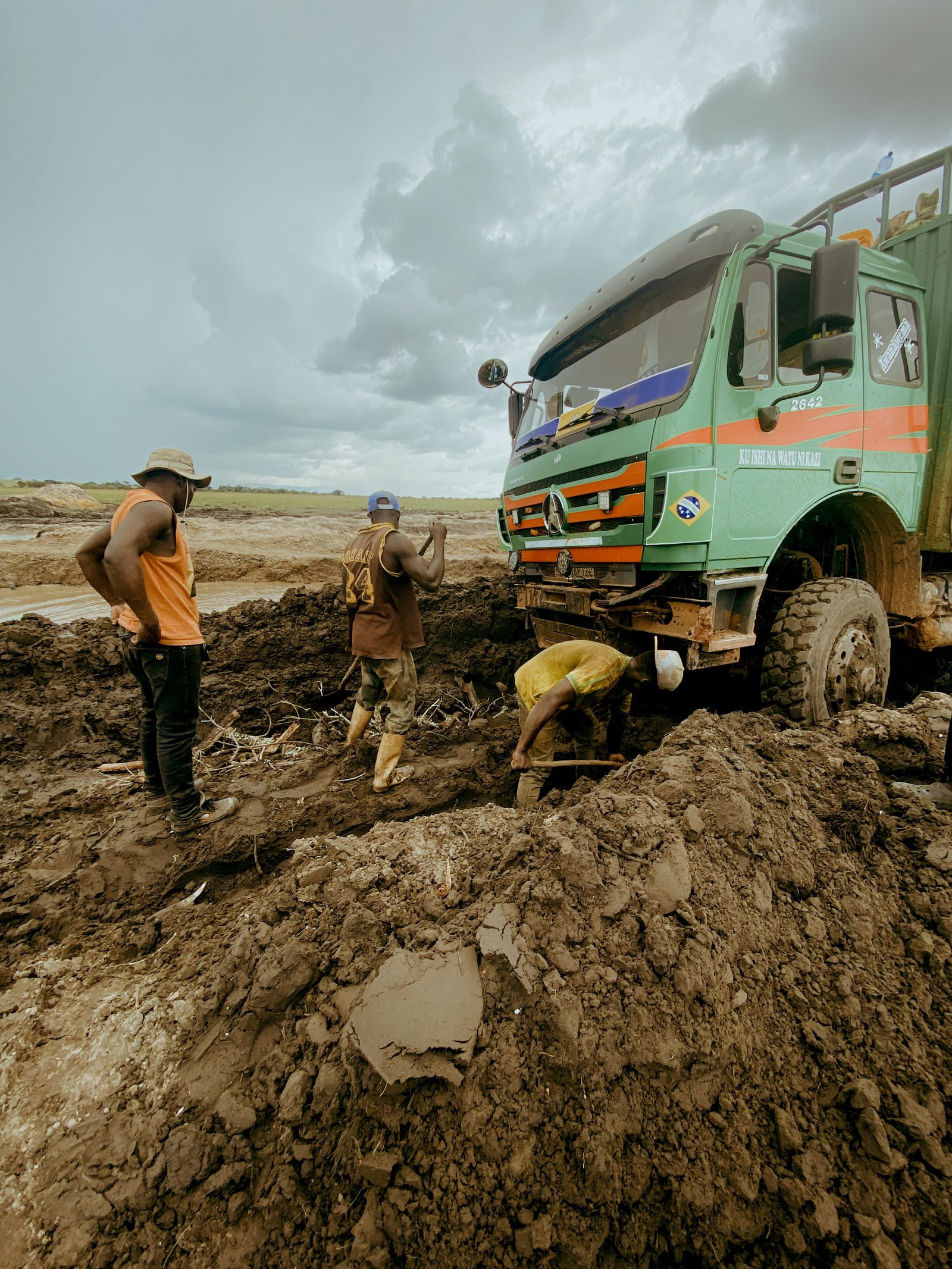
Getting it back on the pavement
Winch out service in Lewisville, TX covers everything that has to happen before a vehicle can be towed or driven at all. It is off the road, or in something, and no amount of throttle is going to change that.
The good news is that a lot of these calls end with you driving home. If the car left the pavement without hitting anything, the recovery is the entire job. The bad news is the thing almost everyone does first: they keep trying. Every extra second of wheelspin digs deeper and turns a fifteen minute pull into a proper excavation.
Stop as soon as the wheels start spinning
This is the one piece of advice worth more than the rest of this page put together. The moment a wheel spins without the car moving, take your foot off it.
Spinning wheels do two things. They polish the surface under the tire into something with even less grip, and they dig the tire down until the chassis sits on the ground and takes the weight off the wheels entirely. A car that would have needed one straight pull now needs jacking, packing and a much longer job. North Texas clay is especially unforgiving here, because it turns slick when wet and then sets around a wheel as it dries.
So stop, get out, look at what is actually under the car, and call. Then wait somewhere safe, which on a highway shoulder means behind the barrier and not beside the vehicle.
Where vehicles get stuck around Lewisville
The lake and its park roads
Lewisville Lake wraps the north and east of the city and it generates more recovery calls than anywhere else. Boat ramps are the classic: a two-wheel drive truck backing a trailer down a wet concrete ramp finds the point where grip disappears, and once the rear wheels are on the algae line the truck is going nowhere but down. Trailers jackknife on the same ramps.
The park approach roads are gravel and clay, and after rain they stay greasy for days after the pavement has dried. Vehicles slide off the edge into the grass and then discover the grass is a lot softer than it looked.
FM-407 and the western edge
Justin Road narrows quickly once you leave the retail strip toward Flower Mound. Long stretches have a soft shoulder with a drainage ditch immediately behind it. A driver who drifts, swerves or simply misjudges a dark turn ends up with two wheels off, and the ditch is always closer than it looked from the seat.
Construction edges on I-35E
The 35Express rebuild leaves temporary edges, drop-offs and unfinished shoulders. A car that pulls over onto what looks like a shoulder can find soft fill instead of base. That is a recovery against live traffic, which means it is worked carefully and sometimes with a lane closed.
Driveways, ditches and yards
Plenty of recoveries never touch a highway. Cars slide off steep driveways in Highland Village, get a wheel over a curb in Old Town, or sink into a soaked lawn after someone parked on the grass for a party.
How a recovery is actually done
- The scene gets read. Where the vehicle sits, what is under it, whether it is stable, and where a truck can park to pull without ending up stuck itself.
- An anchor is set. The truck needs something to pull against. Sometimes that is its own weight and outriggers. Sometimes it is a second vehicle or a snatch block on a fixed point to change the angle.
- Rigging goes on properly. Onto a rated recovery point, never a suspension arm or a plastic bumper mount. This is the part that takes the time and it is the part that keeps everyone safe.
- The pull is slow. Steady tension, everyone clear of the line, no snatching. A winch line under load is dangerous and it is treated that way.
- Then a decision. Undamaged and running means you drive away. Damage, a seized wheel or mud packed into the brakes means it goes onto a flatbed instead.
Bigger vehicles, bigger problem
A loaded truck that leaves the pavement is a different scale of job. Weight works against you at every stage: it sinks further, it needs far more line pull to move, and the anchor has to hold against all of it. That is heavy duty recovery, done with a heavy wrecker or a rotator, and it is billed by the hour per unit rather than as a flat pull.
Where a vehicle has left the road because of a collision rather than a surface, accident towing covers the scene work, the debris clearance and the reporting side as well as the recovery itself.
Questions about winch out and recovery in Lewisville
Is a winch out cheaper than a tow?
Often, because plenty of winch outs end with you driving away. If the vehicle is undamaged and simply stuck, the job is the recovery and nothing else. It stops being cheap when the vehicle has to be dug out, when a second truck is needed for an anchor, or when it comes out damaged and then needs a tow as well.
Can I be pulled out by a friend with a truck and a strap?
People try it constantly and it is how bumpers, tow eyes and occasionally people get hurt. A recovery strap under load stores a lot of energy, and when a cheap hook or a plastic bumper mount lets go it travels. A recovery truck has a rated winch, proper rigging and a way to anchor itself, which is the whole difference.
What if my car is in water at a boat ramp?
Say so immediately, because it changes the job. Water at the ramps on Lewisville Lake means grip is gone and the truck cannot simply back down after you. It usually needs a longer line, a shore anchor and a very controlled pull. Get everyone out of the vehicle and well up the ramp while you wait.
How long does a winch out take?
A car that has slipped a shoulder on FM-407 with firm ground behind it can be back on the pavement in fifteen or twenty minutes once the truck arrives. A vehicle buried to the axles in wet clay, or down a lake embankment where the truck cannot get a straight pull, runs much longer because the rigging is most of the work.
Related help in Lewisville
- Emergency Towing Broken down, blocking a lane, or stopped somewhere you should not be. This is the call that moves first.
- Flatbed Towing All four wheels off the ground. The right call for all-wheel drive, low clearance, EVs and anything that cannot roll.
- Heavy Duty Towing Box trucks, RVs, buses and loaded tractor-trailers need a rotator or a heavy wrecker, not a pickup with a hitch.
- Accident Towing Wreck recovery, cleanup and a tow to the shop, the yard or wherever your insurer sends it.
Need a truck in Lewisville right now?
Tell us where you are, what you drive and what happened. That is enough to get the right truck moving.
Call 469-309-5877